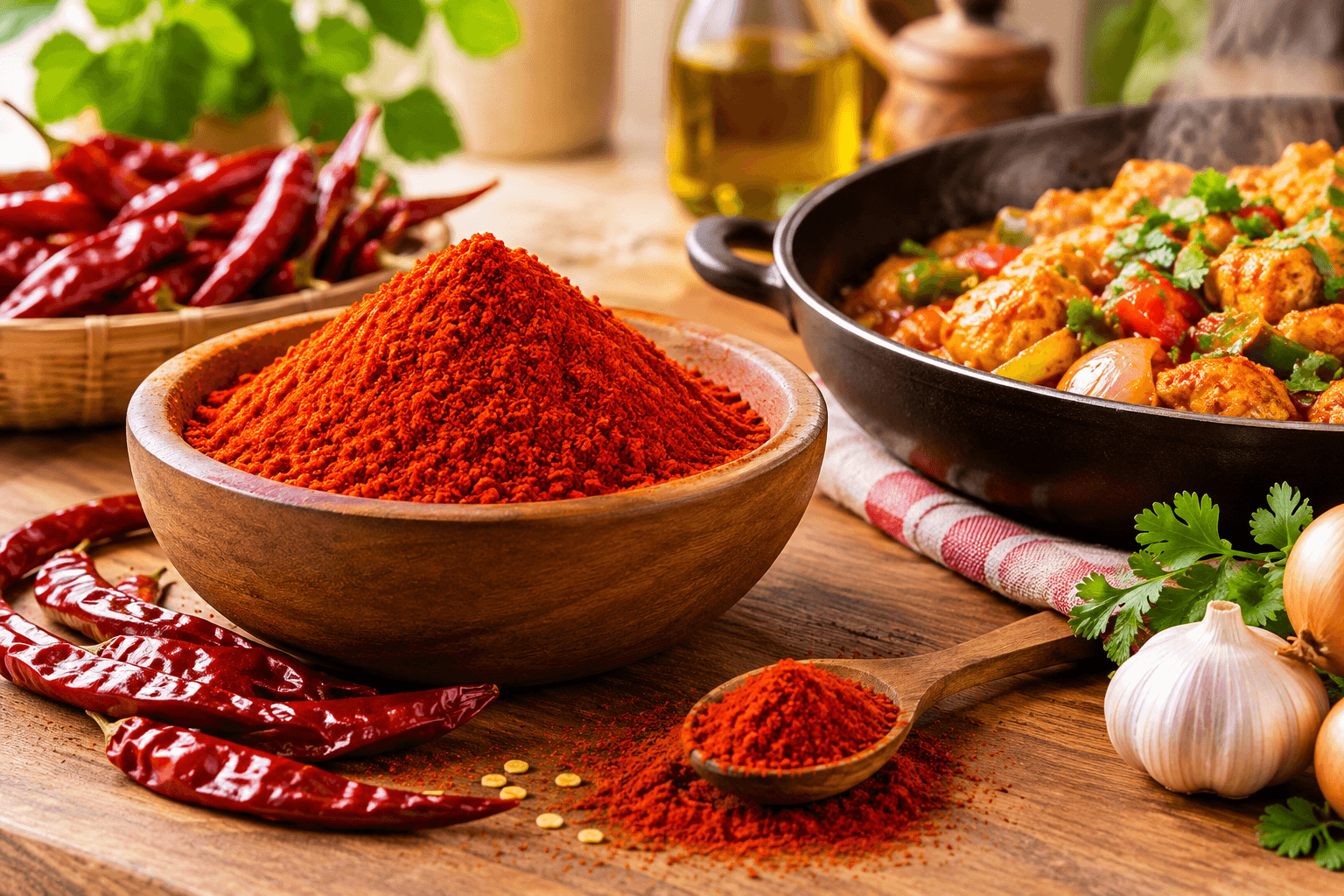
Red chilli powder is made from dried red chillies ground into a fine powder, and a small spoonful adds heat and colour to curries, soups, marinades and eggs. Large population studies have linked eating chilli regularly with a lower risk of death over several years, but they show a link and cannot prove that chilli is the cause.
Chilli is one of the most widely used spices in home kitchens, and health headlines about it are easy to misread. Knowing what the research does and does not show helps you use it sensibly. This guide covers how to cook with red chilli powder, what the studies found and who should take care.
How to use red chilli powder in daily cooking
Red chilli powder works best in small amounts, added at the right moment. These habits help you get the flavour without overpowering a dish.
- Start with about a quarter of a teaspoon per dish, then taste and add more, because heat varies a lot between brands.
- Fry it briefly in hot oil at the start of cooking to bring out its flavour and colour, but keep the heat moderate, since it burns quickly and turns bitter.
- Stir it into marinades with yoghurt, lemon juice or oil for chicken, fish, paneer or tofu.
- Add it to lentils, beans, soups and stews while they simmer, so the heat spreads evenly.
- Sprinkle a pinch over eggs, roasted vegetables, popcorn or fresh fruit such as mango and pineapple.
- Choose a milder, deeper red variety, such as Kashmiri chilli powder, when you want colour more than heat.
- Store it in an airtight jar away from the stove and out of direct light, which helps it keep its colour and flavour.
Is red chilli powder the same as chili powder or cayenne?
Not always. In the US, “chili powder” often means a seasoning blend that also contains spices such as cumin, garlic and oregano. Cayenne pepper is a single type of ground red chilli. Check the ingredients on the label so you know whether you are adding pure chilli or a mix.
What are the health benefits of red chilli powder?
The clearest benefit is flavour: it adds heat and colour with almost no effort. Research on chilli and long term health is interesting but less certain, because the biggest studies can show a link and not a cause.
Is eating chilli linked to a longer life?
Three large studies found that people who ate chilli often were less likely to die during the study period than people who rarely ate it.
- In China, a BMJ study published in 2015 followed almost 487,000 adults aged 30 to 79 for a median of 7.2 years. People who ate spicy food on 6 or 7 days a week had a 14% lower risk of death than those who ate it less than once a week.
- In the US, a 2017 PLOS ONE study of 16,179 adults, followed for a median of 18.9 years, found a 13% lower risk of death among people who ate hot red chilli peppers.
- In Italy, the Moli-sani study, published in 2019, followed 22,811 adults for a median of 8.2 years. Those who ate chilli more than four times a week had a 23% lower risk of death than those who rarely or never did.
All three were observational studies. People who eat chilli often may also differ in their diet, income or lifestyle, and although the researchers adjusted for many of these factors, they could not rule out every one. The authors of the US study state that their design cannot establish cause and effect. None of the studies tested chilli powder on its own.
Can red chilli powder help with weight loss?
There is no good evidence that adding chilli powder to your meals causes weight loss. A 2014 review in the journal Appetite combined 8 small studies with 191 participants in total. It found that taking capsaicinoids, the compounds that make chilli hot, before a meal reduced the amount people ate at that meal by about 74 kcal, with at least 2 mg needed to see an effect.
The review measured food eaten at a single meal, not weight over months. Presstime24 does not recommend capsaicin supplements, and anyone thinking about a supplement should speak to a pharmacist or GP first.
Who should be careful with chilli powder?
Most people can enjoy chilli in normal cooking amounts, but some may need to cut back. The NHS lists spicy foods among the things that can trigger heartburn, and advises people to avoid foods and drinks that set off their symptoms.
- Use less chilli, or leave it out, if spicy meals give you heartburn or an upset stomach.
- Wash your hands after handling chilli powder, and keep it away from your eyes.
- Serve children a milder portion and add chilli to adult plates at the table.
How can you tell if chilli powder is adulterated?
You can’t always tell by looking. Chilli products have been found to contain illegal dyes. In 2022, Hong Kong’s Centre for Food Safety found Sudan dyes, synthetic dyes made for industrial use, in a sample of red chilli flakes imported from India, and told consumers not to eat the affected batch.
- Buy sealed packs from brands and shops you trust, with a clear label and a best before date.
- Check your national food regulator’s recall notices if you are worried about a brand.
- Look up the home checks in India’s Food Safety and Standards Authority (FSSAI) booklet “Detect Adulteration with Rapid Test”, which includes simple water tests for spices.
When to get professional help
Speak to a GP or pharmacist if spicy food regularly gives you heartburn, stomach pain or other symptoms, or if you take medicines for a digestive condition. Before the appointment, note when your symptoms start, what you ate and any medicines you take.