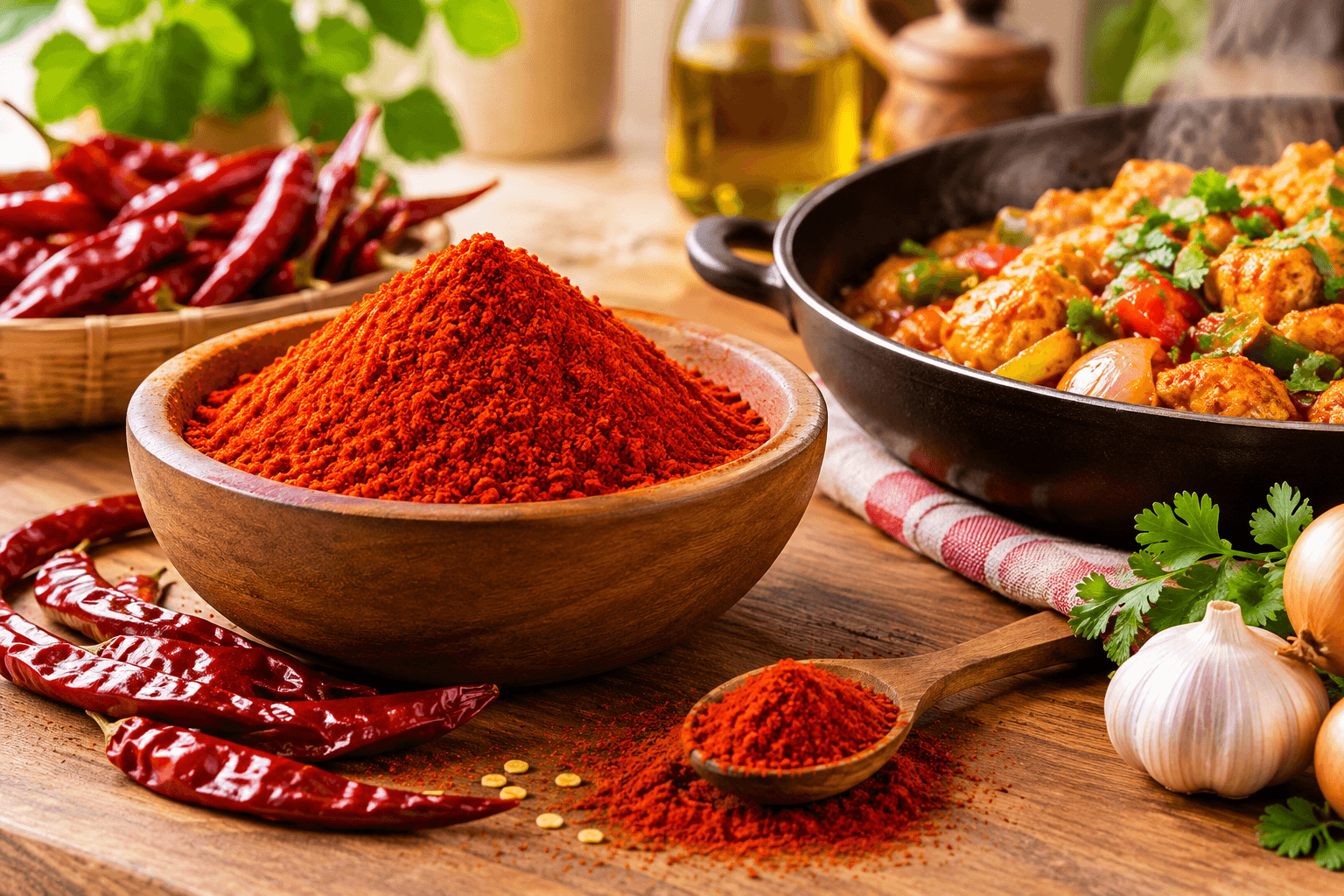
Red chilli powder in daily cooking: uses and benefits
How to cook with red chilli powder every day, what large studies say about chilli and health, and who should go easy on it. Plain facts, without the hype.
By RK Rimel4 min read
Health covers new medical research, public health, nutrition, fitness, mental health, sleep and the health services people rely on. Health stories can affect real decisions, so we report them with extra care. When we cover a study, we explain what kind of study it was, how many people took part, whether independent experts reviewed it before publication, and whether it shows cause and effect or only a link. We give the size of an effect as well as whether one was found, and we say when findings are early, small or come from animal or laboratory work. Our main sources are peer reviewed journals and recognised public health bodies, such as national health services and the World Health Organization, and we link to them so you can read the original. We do not promote medicines, treatments or supplements, and nothing in this section is medical advice. If a story raises questions about your own health, talk to a doctor or another qualified health professional. Everyday food, cooking and clothing guides that are not about health research appear in Lifestyle. Our editorial policy explains how we check health claims, and any change we make is recorded in our corrections log.
Our latest guide covers red chilli powder in daily cooking.
Important: The information in this section is general and for information only. It is not medical advice and is not a substitute for advice from a doctor or other qualified health professional about your own situation. If you have a health concern, speak to a qualified professional; in an emergency, contact your local emergency services.
How to cook with red chilli powder every day, what large studies say about chilli and health, and who should go easy on it. Plain facts, without the hype.
By RK Rimel4 min read