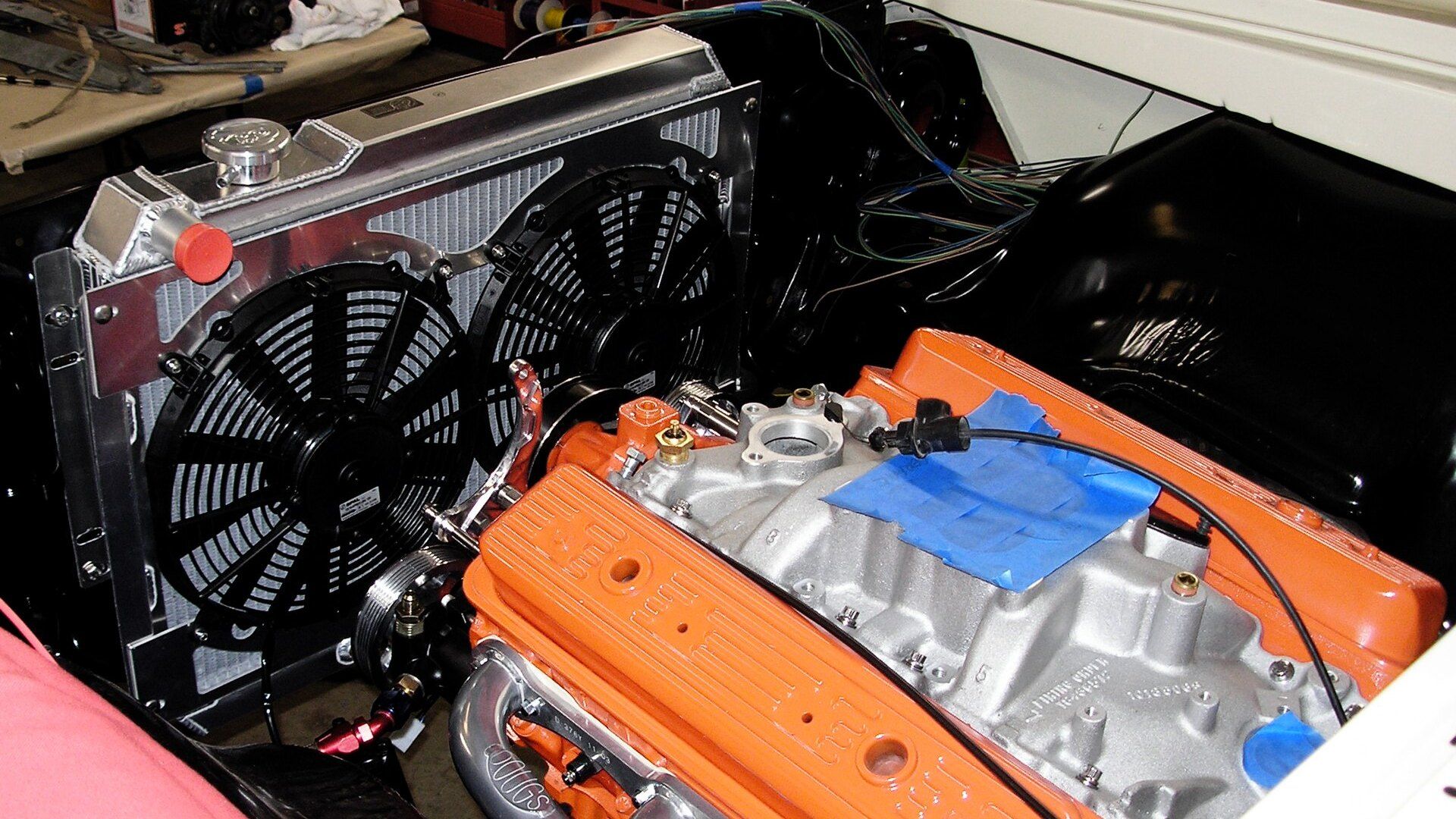
A full aluminum radiator is a radiator whose core and tanks are both made of aluminum, joined by brazing or welding. It has no plastic tanks and no rubber gasket between the tanks and the core. Drivers and fleet owners choose one mainly for strength under heat and pressure, and because aluminum tanks can usually be repaired.
The question comes up most when a radiator leaks. Most standard radiators combine an aluminum core with plastic tanks, and the joint between them is where many leaks begin. This guide explains how a full aluminum radiator is built, how it compares with other types and what to check before you buy one.
What is a full aluminum radiator?
A full aluminum radiator is one in which every part that holds coolant is aluminum. The core is a block of thin aluminum tubes that carry hot coolant, with aluminum fins between them that pass the heat to the air. At each end of the tubes, a header plate joins the core to a tank, and the tanks carry the inlet, the outlet and often the filler neck.
In a full aluminum design, the tubes, fins and headers are usually brazed together in a furnace, and the aluminum tanks are brazed or welded onto the headers. The result is one metal assembly with no separate seal between the tanks and the core.
How is it different from a radiator with plastic tanks?
The difference is the joint between the tank and the core. On a typical radiator with plastic tanks, a rubber gasket sits in a channel around the edge of the aluminum header, the plastic tank sits on top, and metal tabs on the header are crimped over the tank’s edge to squeeze the gasket and seal the joint.
That joint depends on the gasket staying in place. A General Motors patent on radiator tank sealing describes how the gasket can shift during assembly, especially at the corners, and how a displaced gasket can open a leak path. The patent also notes that this kind of leak can seal itself again once pressure returns, which makes it hard to find.
| What to compare | Full aluminum radiator | Aluminum core, plastic tanks | Copper and brass radiator |
|---|---|---|---|
| Tanks | Aluminum, brazed or welded | Plastic, crimped on over a gasket | Brass, soldered |
| Tank seal | Metal joint | Rubber gasket | Solder joint |
| Weight | Light | Light | Heaviest |
| Tank repair | Can usually be welded | Tank usually replaced | Can usually be soldered |
| Typical use | Trucks, machinery, racing, engine swaps, restorations | Most new passenger cars | Older vehicles and some heavy equipment |
| Cost | Higher | Lowest | Varies |
Why choose a full aluminum radiator?
Choose one when the cooling system works hard or when repeated tank leaks are a problem. Removing the plastic tank and gasket takes away one common failure point. Plastic tanks can also crack as they age, which is a frequent reason owners replace a radiator.
These radiators are common in a few situations:
- Choose one for towing, heavy loads and hot climates, where coolant temperatures and pressures stay high for long periods.
- Use one in trucks, construction machinery, agricultural equipment and generators that run for many hours at a time.
- Fit one for racing and track days, where builders often want a thicker core and custom inlet and outlet positions.
- Consider one for engine swaps and classic car restorations, where an original radiator is hard to find or does not fit the new engine.
Weight is a smaller benefit. Aluminum is light, and the US Department of Energy says a 10% reduction in vehicle weight can improve fuel economy by 6% to 8%. A radiator is a small part of a vehicle’s total weight, though, so the saving from one part is modest.
Are there downsides?
Yes, and cost is the main one. A full aluminum radiator usually costs more than a standard replacement with plastic tanks, and for a normal car driven gently, the standard part may last for years.
Quality also varies between makers. Poor welds can leak or crack, and a core that is too thick for the fan and airflow can cool worse than expected. Aluminum also depends on the coolant for corrosion protection, so use the coolant your vehicle or engine maker specifies and do not mix coolant types.
What should you check before buying one?
Check the fit first, then the build quality. A radiator that needs modifications to fit can cause airflow problems and stress on the hoses.
- Confirm the dimensions and the inlet and outlet positions against your vehicle, or ask for drawings for a custom unit.
- Compare the core thickness and number of tube rows with your fan, shroud and airflow.
- Inspect the welds on the tanks, which should be even and continuous.
- Ask whether every radiator is pressure tested before it leaves the factory.
- Check that the pressure cap rating matches your vehicle’s cooling system.
- Ask whether it includes a transmission oil cooler if your vehicle has an automatic gearbox that needs one.
- Review the warranty and how leaks are handled.
Buyers sourcing radiators for fleets or machinery often deal with manufacturers directly. Yangzhou Zuoer Radiator Co., Ltd., a heat exchanger maker in Yangzhou, Jiangsu, China, that says it has more than 20 years of experience, lists a full aluminum radiator range on its website alongside truck radiators, intercoolers and oil coolers. The company says its products are used in trucks, buses, construction and farm machinery, generators and race cars, and that it holds ISO 9001:2015 certification.
For any supplier, ask whether the factory is certified to IATF 16949, the automotive quality management standard that replaced the older ISO/TS 16949. Ask for the certificate itself, with its scope and expiry date, rather than relying on a logo on a website.
When to get professional help
See a qualified mechanic if your engine overheats, if coolant levels keep dropping or if you see coolant under the car. These signs can come from the radiator, but also from the water pump, hoses, thermostat or head gasket, and a pressure test can show where the leak is. Bring a note of when the problem happens, such as in traffic, on hills or when towing.
For more guides on vehicles and car care, see the Automotive section. Businesses buying equipment can find more buying guides in Business & Industry.