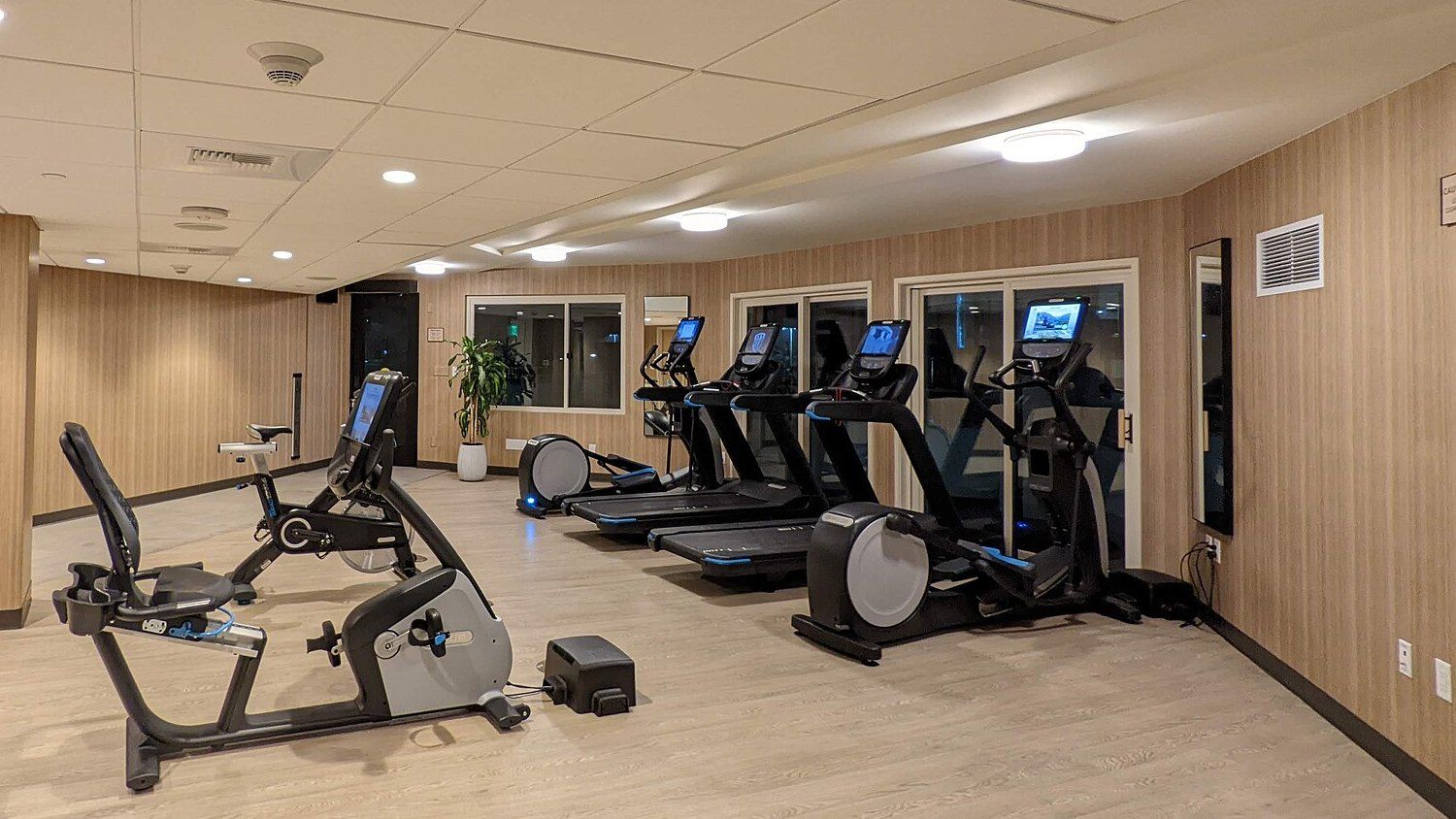
A commercial treadmill is built for many different users and long running hours every day, in places such as gyms, hotels and clubs. A home treadmill is built for one household and lighter, shorter sessions. The difference shows in the motor rating, the frame and deck, the power supply, the safety standard it is tested to and the warranty.
The choice matters most for anyone furnishing a shared gym. A home machine placed in a hotel or office gym can wear out quickly, and its warranty may not cover that kind of use. This guide explains how the two types differ and what to check before you buy either one.
What is the difference between a commercial and a home treadmill?
The main difference is how much use the machine is designed to take. A commercial treadmill is meant to run for hours a day under users of different weights and running styles. A home treadmill is meant for a few sessions a week from the same one or two people.
| What to compare | Commercial treadmill | Home treadmill |
|---|---|---|
| Typical setting | Gyms, hotels, clubs, studios, office and apartment gyms | Houses and flats |
| Daily use | Many users, many hours | One household, shorter sessions |
| ISO 20957 class | S or I | H |
| Motor | Rated for continuous running under load | Often lighter duty; check the continuous rating |
| Frame and deck | Heavier, larger running surface, built for frequent servicing | Lighter, often folds to save space |
| Power | Some models need a dedicated circuit | Usually a standard household socket |
| Warranty | Written for commercial use | Often limited to residential use |
| Price | Higher | Lower |
How do safety standards separate the two?
The international standard ISO 20957-1 sorts stationary training equipment by where it is used. Classes S and I cover training areas run by organisations such as sport associations, clubs, hotels, studios and rehabilitation centres, where the owner controls access. Class H covers equipment for domestic use.
In the United States, ASTM F2115 sets design and manufacturing requirements for treadmills. Its current version, F2115-25, covers both motorised and manual treadmills and is written for users aged 13 and above. Manufacturers selling into Europe often also cite the older EN 957 series, which the EN ISO 20957 parts have largely replaced.
Before buying, ask which standard and which class the exact model was tested to, and ask for the test report rather than relying on a logo in a brochure.
Why does the motor rating matter?
The motor rating tells you whether the treadmill can keep its speed for long periods under load. Treadmill motors are often advertised with a peak figure, which is what the motor can reach briefly, and a continuous duty figure, which is what it can sustain. The continuous figure is the one that matters for daily use.
Commercial machines are designed to run back to back sessions with heavier users and steeper inclines. A home motor working that hard for hours can overheat and wear out sooner. Compare continuous ratings across models, not peak ones, and check the maximum user weight listed in the manual.
How are the frame, deck and belt different?
Commercial treadmills usually have heavier frames, larger running surfaces and parts designed to be serviced often. A wider and longer deck gives tall users and fast runners more room, and a heavier frame stays steadier when many people use it each day.
Home treadmills trade some of that for size and price. Many fold up, which helps in a flat, but folding hinges and lighter decks are not designed for gym traffic. Check these points on any model you consider:
- Measure the running surface, because cramped decks are uncomfortable for running and for tall users.
- Check the maximum user weight, since it reflects how strong the frame and motor are.
- Ask how the deck and belt are replaced, as these are the parts that wear out first.
- Confirm that spare parts and service are available in your country.
Does a commercial treadmill need special wiring?
Some do. Many commercial treadmills draw more power than ordinary appliances, and some manufacturers ask for a dedicated electrical circuit for each machine. Home models usually plug into a standard household socket.
Check the installation section of the manual before delivery day. If it calls for a dedicated circuit, have a qualified electrician confirm that the room can supply it, especially when several machines will run at once.
How do you keep a home treadmill safe around children?
Keep children and pets away from a running treadmill and unplug it when it is not in use. In May 2021 the US Consumer Product Safety Commission (CPSC) announced the recall of about 125,000 Peloton Tread+ treadmills after a six year old child died after being pulled under the rear of the machine. The recall notice listed 72 reports of adults, children, pets or objects being pulled under the treadmill, including 29 reports of injuries to children.
The CPSC advises keeping objects away from treadmills, unplugging the machine after use and keeping the safety key out of children’s reach. In a September 2022 letter to the ASTM treadmill task group, CPSC staff said their testing showed a child’s finger and hand can be pulled into the gap under the rear roller. Put the treadmill in a room you can close off if young children live in the house.
Which type should you buy?
Buy a commercial treadmill for any shared space: gyms, hotels, offices, schools and apartment buildings. These are class S or I settings under ISO 20957-1, and a commercial warranty is written for that use. Businesses running a gym should also review their business insurance, since equipment used by guests or members adds liability.
Buy a home treadmill for personal use in your own home. If one or two people in the house run long distances most days, look at a sturdy home model with a strong continuous motor rating, or a light commercial model if space and budget allow.
What should a gym ask a treadmill supplier?
A gym owner should ask about use, standards and support before price. Gyms often buy treadmills and strength machines at the same time, so some buyers compare suppliers that make both. Ningbo New Noble Sport Equipment, a fitness equipment maker in Ningbo, China, that says it has worked in the industry since 1993, lists commercial treadmills and home use treadmills alongside its Multi Function Trainers on its website.
Whichever supplier you consider, ask these questions:
- Confirm the ISO 20957 class or other standard each model was tested to, and ask for the test report.
- Ask whether the warranty covers commercial use, and for how long on the frame, motor and parts.
- Check the continuous motor rating and the maximum user weight.
- Ask about spare parts, service visits and delivery times in your country.
- Request the electrical requirements before you plan the room layout.
When to get professional help
Speak to a qualified electrician before installing several commercial treadmills, and to your insurer before opening a gym to members or guests. Bring the manufacturer’s manuals, the electrical requirements and the floor plan, so both can give you a clear answer.
For more explainers on equipment and running a business, see the Business & Industry section.